Image Classification Services
What is an image classification service?
Image classification is one of the diverse tasks in a field of computer vision. It is a preparation of the machine learning algorithm, which is to classify an image according to its content: objects, scenes, etc. It is basic in artificial intelligence and machine learning that is widely applied in numerous tasks as facial recognition, medical diagnosis, and self-driving cars.
Infosearch offers image classification datasets, which are essential in the training of Machine learning algorithms that help in image classification. Some of these datasets include labeled images across the different categories to improve on building efficient and reliable image classification models.
Object Detection
Satellite Image Analysis
Hand Gesture Recognition
Applications of Image Classification in Image Processing
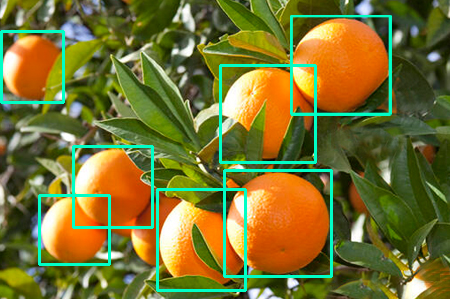
- Object Detection and Recognition: Image classification is often the first step in detecting and recognizing objects in images or videos. For example, image classification is used in complete self-driving automobiles in order to identify traffic signs, pedestrians, and other automobiles.
- Facial Recognition: Image classification is very important in facial recognition system where images of faces are sorted based on identity or emotions.
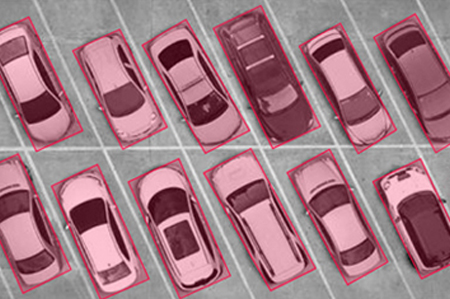
- Satellite Image Analysis: Satellite images can be classified for the use of land, from the planning of cities, checking on deforestation and many other uses. Image classification aids in recognition of other features such as water bodies, buildings, and vegetation.
- Content-Based Image Retrieval (CBIR): In image search engines, classification plays a key role in seeking categorized images depending on content hence facilitating image search engine based on picture resemblance.
Industry-Specific Use of Image classification
- Healthcare: Image classification datasets would help doctors to diagnose diseases referred to as imaging for instance in the radiology such as identification of tumors or diseases in the skin through image of the affected part.
- Agriculture: Image classification services can be used to examine satellite images or drone footages in order to survey the field and determine the health and readiness of the crops, identify pests, and estimate yields, to assist farmers.
- Manufacturing: In manufacturing industries the image classification datasets can be used in defect recognition, in monitoring of linings, and in quality assurance and it minimizes the inconsistencies in production of products.
Why choose Infosearch to Outsource Your Image Classification Services?
Expertise and Specialized Workforce of Infosearch adds the advantage of years of experience in developing image classification for different industries. Our company provides you with affordable price rates for all your Image classification requirements. To this end, we have well-established quality assurance measures aimed at ensuring that the classified images meet your required standards and as importantly, the level of accuracy of the classified images is optimal.
Infosearch can offer customized image classification services based on particular service that a client needs. The services can be customized depending on the business objectives
As a reputed data annotation service provider, Infosearch likely prioritizes data security and complies with industry standards for data protection (e.g., GDPR, HIPAA). This ensures that sensitive image data (especially for sectors like healthcare or legal) is processed safely.
With experience across industries like healthcare, retail, and e-commerce, Infosearch understands the variation and regulatory requirements of various sectors, ensuring that your project is handled with care and precision.
FAQs
Image classification can help AI systems to automatically divide images in predefined classes according to the visual content. It determines patterns, textures, shapes, and features to give labels to the pictures.
The important ones are automated image classification, visual pattern recognition, processing of large datasets, predictive analysis, and assisting AI model training in various industries, including healthcare, retail, and manufacturing.
Image classification finds wide application in industries in the following manner:
- Retail and eCommerce product classification.
- Diagnostics and medical image analysis.
- Content filtering and content moderation.
- Quality control in the production process.
- Security and surveillance.
- Agricultural surveillance and satellite intelligence.
- Intelligent applications and autonomous systems.
The following use cases can be used to assist organizations in automating the analysis of visual data and better decision making.
Infosearch’s image classification is based on machine learning industrialization methods, which include supervised learning, deep learning models, and workflows of structured data preparation. Labeled training datasets, model validation processes and continuous optimization are used to enhance accuracy and performance.
To guarantee high quality results, we have incorporated the data preparation in our workflow, model training support, classification validation, and performance monitoring.
We also employ a mix of superior practices and techniques like:
- Preprocessing and normalization of data.
- Pattern analysis and feature extraction.
- Training support of deep learning models.
- Single-label and multi-label classification processes.
- Checking the data quality and minimizing bias.
- Quality control through human.
These methods guarantee precise, scalable and reliable classification performance.
Image classification imposes a label on a whole image depending on its contents, whereas object identification detects several objects in an image and their locations with the help of bounding boxes.
Simply put, classification is used to answer questions of the form of what is in the image, or object detection has the answers of form what objects are present and where they are located.
The supervised learning is a machine learning method in which the models are trained with labeled data - each image is accompanied with a correct category label. Based on these examples, the model will learn and predict labels to new images.
The technique can improve the accuracy of classification and is common in AI and computer vision techniques.
Single-label classification is used to give a single label to each picture, whereas multi-label classification permits many labels when there are other relevant objects or features in a picture.
Indicatively, a photograph of a dog and cat would be labeled in one domain of single-label classification and several labels in multi-label classification.
At Infosearch, we are being fair and accurate with our structured data management and quality control measures, which include:
- Multicultural and representative training datasets.
- Detection and mitigation of bias work flows.
- Detection and mitigation of bias work flows.
- Assessment and benchmarking of models continuously.
- Standards of domain specific labeling.
The practices enhance the reliability of models and their stability in a variety of data conditions.
Yes. Our image classification services can be scaled to work well with large datasets with automated workflows, distributed processing and trained annotation teams.
Our products contribute to large scale image classifications and still maintain their accuracy, consistency, and quick turnaround times to assist enterprises in speeding up the process of AI development.